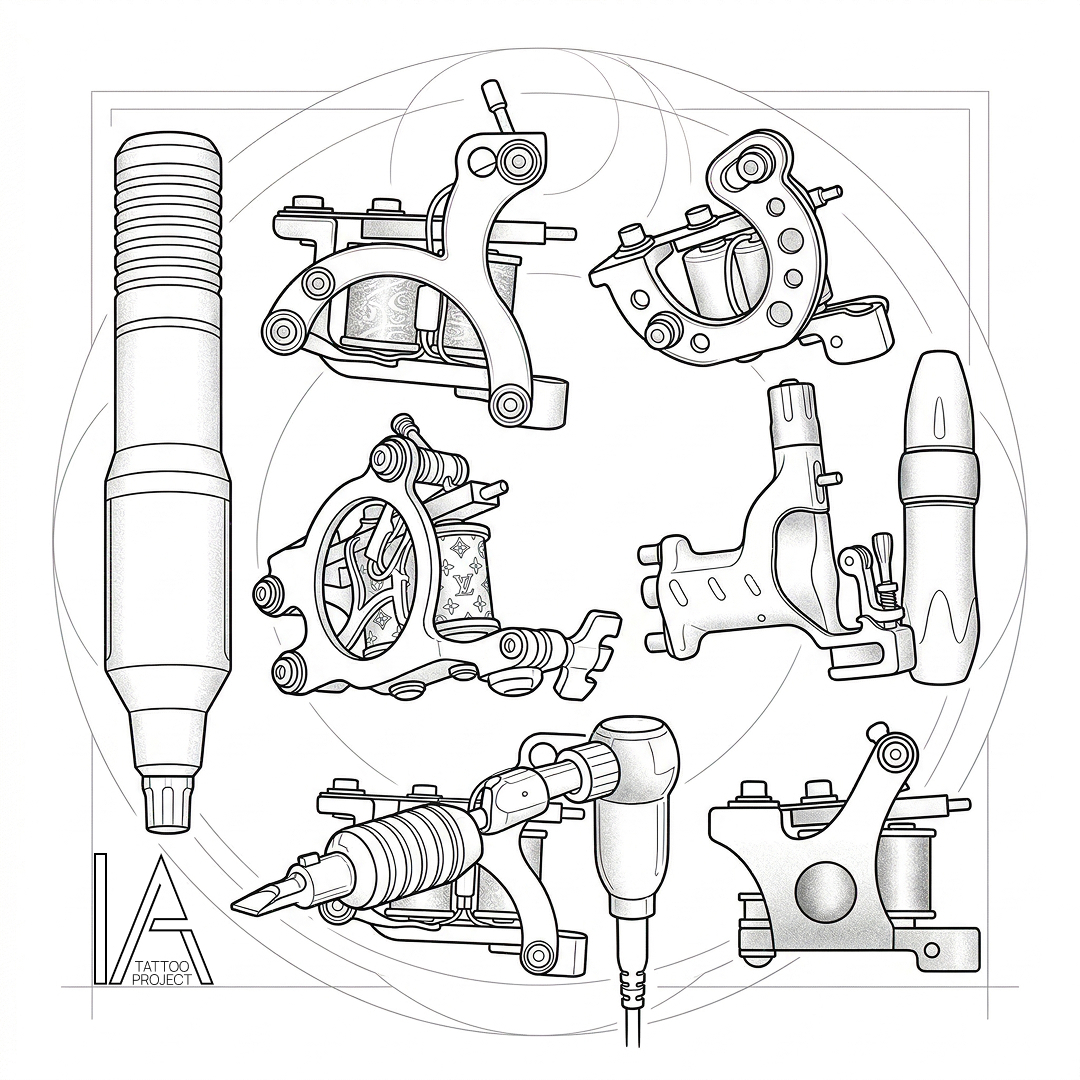
At its core, a tattoo machine is a device that converts energy into controlled, repetitive needle movement. While designs and technologies have evolved, the fundamental principle remains the same: moving a needle in and out of the skin with precision and consistency.
Understanding how this movement is generated is essential for both technical control and long-term results.
The Basic Principle
All tattoo machines perform one key function: they translate energy into linear motion of the needle.
This motion must be:
– consistent
– controlled
– repeatable
– adaptable to different techniques
The way this motion is generated differs between machine types.
Coil Machines: Electromagnetic Motion
Coil machines operate using electromagnetism.
When electrical current passes through coils, it creates a magnetic field that pulls a metal armature bar downward. This movement drives the needle into the skin. As the circuit breaks, the bar returns to its original position via spring tension, and the cycle repeats.
This creates a rapid up-and-down motion.
Key characteristics:
– strong mechanical “hit”
– high feedback
– adjustable through tuning
– higher noise and vibration
Coil machines require manual tuning and are sensitive to setup, making them highly customizable but less stable.
Rotary Machines: Motor-Driven Precision
Rotary machines use an electric motor to generate movement.
The motor produces rotational motion, which is converted into linear needle movement through a cam or direct drive system. This results in a smooth, continuous motion.
Key characteristics:
– consistent output
– lower vibration
– minimal tuning required
– quieter operation
Because of their stability, rotary machines are widely used for both lining and shading.
Pen Machines: Modern Ergonomic Systems
Pen machines are a refined form of rotary machines, designed in a cylindrical, pen-like shape.
The motor is enclosed within the body, and needle cartridges are inserted directly into the front. Internally, they use the same principle — converting rotation into linear motion — but with improved ergonomics.
Key characteristics:
– balanced weight distribution
– ergonomic grip
– cartridge-based workflow
– reduced fatigue during long sessions
Pen machines represent a modern shift toward efficiency, hygiene, and control.
Motion, Speed and Force
Regardless of the machine type, three factors define how the tattoo is applied:
Speed (frequency)
How fast the needle moves. Influenced by voltage and motor/coil response.
Stroke (distance)
How far the needle travels in each cycle. Affects line saturation and shading softness.
Hit (force)
The strength with which the needle enters the skin. Determines how pigment is deposited.
These elements must work together in balance.
Machine and Skin Interaction
A tattoo machine does not work in isolation — it interacts with living skin.
Too much force can cause trauma.
Too little can result in poor pigment retention.
Inconsistent motion leads to uneven lines.
The machine is only as effective as the control behind it.
Technology vs Technique
Modern machines offer more stability and convenience, but they do not replace technique.
Understanding the mechanics behind each system allows artists to make informed decisions — not based on trends, but on how a tool aligns with their working method.
In the end, the goal remains the same: controlled movement, precise placement, and a result that lasts.
Understanding how this movement is generated is essential for both technical control and long-term results.
The Basic Principle
All tattoo machines perform one key function: they translate energy into linear motion of the needle.
This motion must be:
– consistent
– controlled
– repeatable
– adaptable to different techniques
The way this motion is generated differs between machine types.
Coil Machines: Electromagnetic Motion
Coil machines operate using electromagnetism.
When electrical current passes through coils, it creates a magnetic field that pulls a metal armature bar downward. This movement drives the needle into the skin. As the circuit breaks, the bar returns to its original position via spring tension, and the cycle repeats.
This creates a rapid up-and-down motion.
Key characteristics:
– strong mechanical “hit”
– high feedback
– adjustable through tuning
– higher noise and vibration
Coil machines require manual tuning and are sensitive to setup, making them highly customizable but less stable.
Rotary Machines: Motor-Driven Precision
Rotary machines use an electric motor to generate movement.
The motor produces rotational motion, which is converted into linear needle movement through a cam or direct drive system. This results in a smooth, continuous motion.
Key characteristics:
– consistent output
– lower vibration
– minimal tuning required
– quieter operation
Because of their stability, rotary machines are widely used for both lining and shading.
Pen Machines: Modern Ergonomic Systems
Pen machines are a refined form of rotary machines, designed in a cylindrical, pen-like shape.
The motor is enclosed within the body, and needle cartridges are inserted directly into the front. Internally, they use the same principle — converting rotation into linear motion — but with improved ergonomics.
Key characteristics:
– balanced weight distribution
– ergonomic grip
– cartridge-based workflow
– reduced fatigue during long sessions
Pen machines represent a modern shift toward efficiency, hygiene, and control.
Motion, Speed and Force
Regardless of the machine type, three factors define how the tattoo is applied:
Speed (frequency)
How fast the needle moves. Influenced by voltage and motor/coil response.
Stroke (distance)
How far the needle travels in each cycle. Affects line saturation and shading softness.
Hit (force)
The strength with which the needle enters the skin. Determines how pigment is deposited.
These elements must work together in balance.
Machine and Skin Interaction
A tattoo machine does not work in isolation — it interacts with living skin.
Too much force can cause trauma.
Too little can result in poor pigment retention.
Inconsistent motion leads to uneven lines.
The machine is only as effective as the control behind it.
Technology vs Technique
Modern machines offer more stability and convenience, but they do not replace technique.
Understanding the mechanics behind each system allows artists to make informed decisions — not based on trends, but on how a tool aligns with their working method.
In the end, the goal remains the same: controlled movement, precise placement, and a result that lasts.