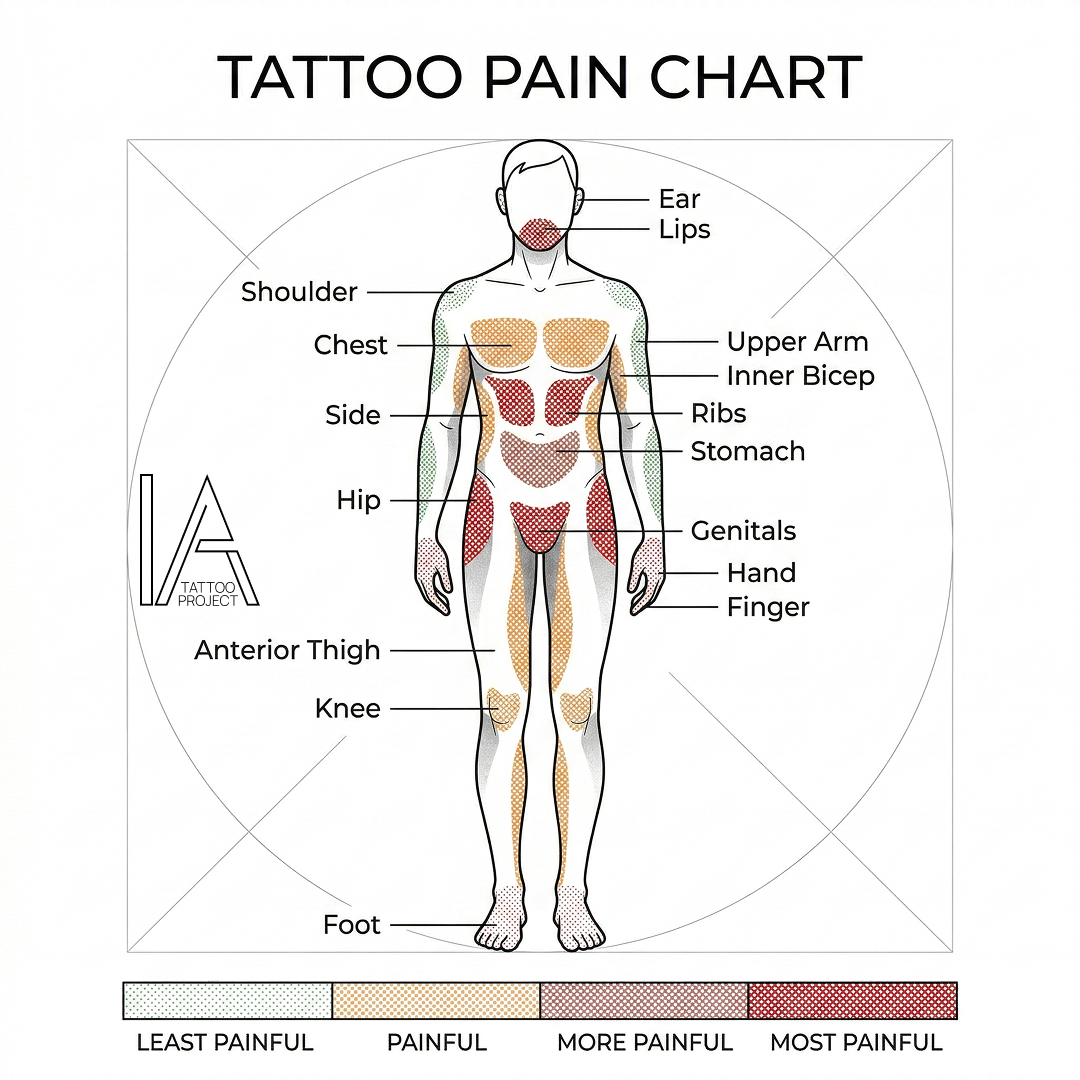
Tattooing is often associated with pain, but the sensation is far more nuanced than many people expect. It changes significantly depending on where the tattoo is placed, how long the session lasts, and how the individual body responds. Understanding these patterns helps reduce anxiety and allows the process to be approached with greater confidence.
Pain during tattooing is not simply a matter of tolerance. It is influenced by anatomy, nerve density, skin thickness, proximity to bone, and the amount of natural cushioning provided by muscle or fat. Areas that move frequently or contain many nerve endings often feel sharper or more reactive, while more stable and padded zones are usually easier to tolerate.
What Influences Tattoo Pain
Several physical factors determine how intense a specific placement may feel. Skin that is thin or stretched tightly over bone usually transmits sensation more directly. Areas rich in nerve endings can feel sharper, more concentrated, or more sensitive to repeated passes. Regions with stronger muscle coverage tend to soften vibration and reduce discomfort. Movement also matters, as joints and flexible skin can become irritated more quickly during a session.
Although everyone experiences pain differently, the body follows clear anatomical patterns.
Although everyone experiences pain differently, the body follows clear anatomical patterns.
Lower Sensitivity Areas
For most people, the more comfortable placements include the outer upper arm, shoulder, upper thigh, and calf. These areas typically have thicker skin and better natural cushioning, which helps absorb vibration and reduce sharp sensation. Because of this, they are often recommended for a first tattoo or for longer sessions.
The discomfort in these zones is usually steady and manageable rather than intense.
The discomfort in these zones is usually steady and manageable rather than intense.
Moderate Sensitivity Areas
Areas such as the forearm, upper back, outer chest, and lower thigh often fall into a moderate category. The sensation becomes more noticeable here, especially during detailed line work or longer appointments, but usually remains tolerable.
Many people describe these placements as uncomfortable rather than painful.
Many people describe these placements as uncomfortable rather than painful.
High Sensitivity Areas
More challenging placements include the ribs, spine, elbows, knees, ankles, feet, hands, and fingers. These zones often combine thinner skin, less padding, and close proximity to bone or joints. The sensation may feel sharper, deeper, or more vibrational, sometimes radiating through the body.
These areas can still be tattooed successfully, but they often require stronger focus and better pacing.
These areas can still be tattooed successfully, but they often require stronger focus and better pacing.
Very Sensitive Areas
For many clients, the neck, sternum, inner arm, inner thigh, and areas close to major nerve clusters are among the most intense placements. These regions are often highly reactive and may feel emotionally overwhelming as well as physically demanding.
Sessions in these placements are frequently shorter or include breaks to maintain comfort and control.
Sessions in these placements are frequently shorter or include breaks to maintain comfort and control.
How Tattoo Pain Changes During a Session
Tattoo pain is rarely constant. The first minutes often feel the sharpest, as the body has not yet adapted to the sensation. Over time, many people settle into the process, though fatigue and cumulative sensitivity can increase discomfort later in the session.
People commonly describe the feeling as scratching, burning, stinging, buzzing, or repetitive heat.
People commonly describe the feeling as scratching, burning, stinging, buzzing, or repetitive heat.
How to Make the Experience Easier
Preparation makes a significant difference. Good sleep, proper food, hydration, and stable energy levels all improve tolerance. Avoiding alcohol and blood thinners before the session is also important. Calm breathing, relaxed posture, and open communication with the artist help reduce unnecessary tension.
A safe environment and trust in the person doing the work often lower perceived pain more than expected.
A safe environment and trust in the person doing the work often lower perceived pain more than expected.
Pain and Meaning
Despite the discomfort, many people remember tattooing not as pain, but as a meaningful experience. The sensation becomes part of the process — a temporary challenge connected to something lasting.
Understanding how the body responds allows tattooing to be approached with awareness rather than fear. That shift often makes the experience more controlled, personal, and empowering.